Introduction
Every four years, an event occurs in the Bitcoin network that has historically preceded the most explosive bull runs in cryptocurrency history. It's called the halving, and understanding its implications isn't just academic—it's potentially one of the most important factors in building a successful long-term Bitcoin investment strategy.
While short-term traders scramble to time the market around halving events, long-term investors who understand the deeper mechanics have consistently outperformed by positioning themselves strategically and holding through the volatility. The 2024 halving has already occurred, and whether you're evaluating your current position or planning for the next cycle, the patterns and principles we'll explore remain critically relevant.
In this comprehensive guide, we'll break down exactly what the Bitcoin halving means for your investment strategy. You'll learn how previous halvings have shaped market cycles, why the supply shock matters for long-term price appreciation, and most importantly, how to position your portfolio to benefit from this predictable yet powerful phenomenon. By the end, you'll have a clear framework for incorporating halving cycles into your broader HODL strategy.
Photo by Behnam Norouzi on Unsplash
What is the Bitcoin Halving?
The Bitcoin halving is a programmed event built into Bitcoin's core protocol that reduces the reward miners receive for validating transactions by exactly 50%. This occurs every 210,000 blocks, which translates to approximately every four years given Bitcoin's target block time of 10 minutes.
To understand why this matters, we need to briefly examine how new Bitcoin enters circulation. Miners—the computers that secure the network and process transactions—receive newly created Bitcoin as a reward for their work. This is the only way new Bitcoin is created, making it fundamentally different from fiat currencies that central banks can print at will.
When Bitcoin launched in 2009, miners received 50 BTC for each block they successfully mined. After the first halving in 2012, this dropped to 25 BTC. The 2016 halving reduced it to 12.5 BTC, and the 2020 halving brought it down to 6.25 BTC. Following the April 2024 halving, miners now receive just 3.125 BTC per block.
The Finite Supply Equation
This halving mechanism is directly tied to Bitcoin's most important property: its fixed supply cap of 21 million coins. Unlike gold, where increased prices can incentivize more mining and increase supply, Bitcoin's emission schedule is mathematically predetermined and cannot be changed regardless of price or demand.
Currently, over 19.5 million Bitcoin have already been mined, representing more than 93% of all Bitcoin that will ever exist. The halvings ensure that the remaining supply is released increasingly slowly, with the final Bitcoin expected to be mined around the year 2140.
Stock-to-Flow: Understanding Scarcity
Economists measure the scarcity of commodities using a metric called stock-to-flow (S2F), which divides the existing supply (stock) by the annual production (flow). Gold has historically had the highest stock-to-flow ratio of any commodity at around 60, meaning it would take 60 years of production to double the existing supply.
After the 2024 halving, Bitcoin's stock-to-flow ratio has surpassed gold's, making it the scarcest monetary asset in human history by this measure. This isn't speculation—it's mathematical certainty built into the protocol.
For long-term investors, this creates a compelling thesis: as the flow of new Bitcoin decreases while demand remains constant or increases, basic economic principles suggest upward pressure on price. The halving is essentially a supply shock that occurs on a predictable schedule, giving patient investors an edge in positioning their portfolios.
Why Bitcoin Halving Matters for Long-Term Investors
Understanding the halving isn't just about grasping a technical mechanism—it's about recognizing one of the most powerful catalysts for long-term value appreciation in the cryptocurrency market. Here's why this matters for your investment strategy.
The Supply Shock Effect
Imagine if the world's gold mines suddenly started producing half as much gold overnight, while jewelry demand, industrial use, and investment demand remained unchanged. Basic economics tells us prices would rise to find a new equilibrium. This is essentially what happens with Bitcoin at each halving, except it's even more pronounced because the supply reduction is permanent and compounds over time.
Before the 2024 halving, approximately 900 new Bitcoin entered circulation daily. Post-halving, that number dropped to roughly 450 BTC per day. At current prices, this represents billions of dollars less in new supply entering the market annually—supply that previously needed to be absorbed by new buyers just to maintain price stability.
Miner Economics and Market Dynamics
The halving fundamentally changes the economics for Bitcoin miners. When block rewards are cut in half, miners with higher operating costs may become unprofitable and forced to sell their Bitcoin holdings or shut down operations. This creates short-term selling pressure but ultimately leads to a more efficient, resilient mining network.
Historically, this miner capitulation phase has created excellent accumulation opportunities for long-term investors. Those who understand the cycle can use these periods of weakness to build positions before the supply shock effects fully materialize in price.
| Metric | Pre-2024 Halving | Post-2024 Halving |
|---|---|---|
| Block Reward | 6.25 BTC | 3.125 BTC |
| Daily New Supply | ~900 BTC | ~450 BTC |
| Annual Inflation Rate | ~1.7% | ~0.85% |
| Stock-to-Flow Ratio | ~56 | ~112 |
| Years to Double Supply | ~56 years | ~112 years |
The Reflexive Cycle
The halving creates a reflexive cycle that tends to amplify price movements. As supply decreases and prices begin to rise, media attention increases, bringing new investors into the market. This increased demand, meeting reduced supply, pushes prices higher still, creating a virtuous cycle that has historically culminated in parabolic bull markets.
For long-term investors, understanding this cycle provides a framework for managing expectations and emotions. Rather than being surprised by volatility, you can anticipate the phases of accumulation, markup, euphoria, and correction that have characterized every post-halving cycle.
Institutional Recognition
The 2024 halving cycle is notably different from previous ones due to institutional involvement. The approval of spot Bitcoin ETFs in January 2024 created new demand channels just months before the halving's supply reduction took effect. Major financial institutions, corporations, and even nation-states are now accumulating Bitcoin, fundamentally changing the demand side of the equation.
This institutional adoption adds a new dimension to the halving thesis. While previous cycles were driven primarily by retail speculation, institutional investors with longer time horizons and deeper pockets may create more sustained, less volatile appreciation over time.
Historical Halving Analysis: Patterns That Inform Strategy
While past performance doesn't guarantee future results, the historical data from previous halving cycles provides valuable insights for developing a long-term investment strategy. Let's examine each halving and the patterns that emerged.
The First Halving: November 28, 2012
Bitcoin's first halving reduced the block reward from 50 BTC to 25 BTC. At the time, Bitcoin was trading around $12, and the cryptocurrency was known only to a small community of technologists and libertarians.
In the 12 months following the halving, Bitcoin experienced a remarkable 8,000%+ increase, reaching approximately $1,000 by late 2013. While the percentage gains seem astronomical by today's standards, the small market cap and nascent nature of the market meant volatility was extreme in both directions.
Key observation: The first halving demonstrated that reduced supply, combined with growing awareness, could create explosive price appreciation. The cycle peaked approximately 12 months post-halving before entering a prolonged bear market.
The Second Halving: July 9, 2016
By the second halving, Bitcoin had matured significantly. Trading around $650 at the time of the halving, Bitcoin went on to reach nearly $20,000 by December 2017—a gain of approximately 2,900% from halving to cycle peak.
This cycle introduced the world to the cryptocurrency boom, with ICOs (Initial Coin Offerings) and mainstream media coverage bringing millions of new participants into the market. The cycle peaked approximately 18 months after the halving.
Key observation: While the percentage gains were smaller than the first cycle, the absolute dollar appreciation was far greater. The cycle took longer to reach its peak, suggesting maturation of the market.
The Third Halving: May 11, 2020
The 2020 halving occurred in unique circumstances—the early months of the COVID-19 pandemic had just caused a severe market crash, with Bitcoin briefly falling below $4,000 in March before recovering to approximately $8,600 by the halving date.
This cycle saw unprecedented institutional adoption, with companies like MicroStrategy and Tesla adding Bitcoin to their balance sheets. Bitcoin reached an all-time high of approximately $69,000 in November 2021—roughly 18 months post-halving, consistent with the previous cycle timing.
Key observation: Despite the "unprecedented" nature of the pandemic environment, the halving cycle played out with remarkable consistency to previous patterns. Institutional adoption added a new dimension but didn't fundamentally alter the cyclical behavior.
The 2024 Halving: What We've Seen So Far
The April 2024 halving occurred with Bitcoin trading around $64,000—already above the previous cycle's all-time high, a first in halving history. This was largely attributed to the spot ETF approvals earlier in the year, which fundamentally changed the demand landscape.
Unlike previous cycles where significant appreciation occurred post-halving, the 2024 cycle saw substantial gains leading up to the halving. This front-running of the halving event by sophisticated institutional investors may indicate a maturing market that prices in events more efficiently.
Pattern Recognition for Investors
Several consistent patterns emerge from this historical analysis:
-
Diminishing percentage returns: Each cycle has produced smaller percentage gains than the previous one, which is natural as market cap grows and the market matures.
-
Consistent timing: Cycle peaks have consistently occurred 12-18 months after the halving, regardless of external circumstances.
-
Pre-halving accumulation: Smart money has historically accumulated in the 6-12 months before each halving, creating support levels.
-
Post-peak corrections: Every cycle has been followed by a 70-85% correction from peak to trough, creating the next accumulation opportunity.
These patterns don't guarantee future outcomes, but they provide a framework for long-term investors to structure their expectations and strategies.
How to Build Your Bitcoin Halving Investment Strategy
Armed with an understanding of what the halving is and how it has historically affected markets, let's develop a practical strategy for incorporating this knowledge into your long-term investment approach.
Step 1: Establish Your Core Position Before the Next Halving
The single most important strategic consideration is simple: be positioned before the halving occurs, not after. Historical data consistently shows that waiting for "confirmation" of a bull market post-halving means missing significant gains.
For the current cycle, if you're not yet positioned, the question becomes one of accumulation strategy rather than timing. The next halving won't occur until approximately 2028, giving you a substantial window to build your position gradually.
Step 2: Implement Dollar-Cost Averaging (DCA)
Rather than attempting to time market bottoms—a strategy that fails far more often than it succeeds—implement a consistent dollar-cost averaging approach. This means investing a fixed amount at regular intervals regardless of price.
DCA accomplishes several objectives: - Removes emotional decision-making from the equation - Ensures you accumulate more Bitcoin when prices are low - Eliminates the risk of investing a lump sum at a cycle peak - Creates a sustainable, long-term habit
Step 3: Understand the Cycle Phases and Adjust Accumulation
While pure DCA works well, sophisticated investors may choose to weight their accumulation based on cycle timing. The Bitcoin market tends to move through predictable phases:
-
Prices typically consolidate after the previous cycle's bear market bottom. This is historically the optimal time for aggressive accumulation. Consider allocating a larger percentage of your investment budget during this phase.
-
Markets often begin to price in the upcoming supply shock. Accumulation remains favorable, but expect increased volatility. Maintain your DCA strategy but consider front-loading if you have cash reserves.
-
Supply shock effects begin materializing. Continue regular DCA but resist the urge to chase parabolic moves. Focus on holding rather than adding during rapid appreciation.
-
Historically when cycle peaks occur. Consider reducing accumulation rate and possibly taking some profits if your position has grown beyond your target allocation.
-
Prices typically correct 70-85% from peak. This is where the next cycle's accumulation phase begins. Increase DCA amounts if possible—these are historically the best entry points.
Step 4: Set Position Size and Risk Management Parameters
No matter how compelling the halving thesis, Bitcoin remains a volatile and relatively young asset class. Your position size should reflect both the opportunity and the risk.
A common framework used by financial advisors suggests: - Conservative allocation: 1-5% of portfolio - Moderate allocation: 5-10% of portfolio - Aggressive allocation: 10-20% of portfolio
Your appropriate allocation depends on your risk tolerance, investment timeline, and financial situation. The key principle: invest only what you can afford to hold through a potential 70-80% drawdown without being forced to sell or losing sleep.
Step 5: Choose Your Custody Solution
For a true long-term HODL strategy, how you store your Bitcoin matters significantly. Options include:
Exchange custody: Convenient but introduces counterparty risk (as FTX customers learned painfully). Acceptable for small amounts but not recommended for significant holdings.
Hardware wallets: Devices like Ledger or Trezor that store your private keys offline. The gold standard for self-custody, combining security with reasonable accessibility.
Multi-signature setups: Advanced arrangements requiring multiple keys to authorize transactions. Provides additional security for larger holdings.
Bitcoin ETFs: For investors who prefer traditional brokerage accounts and don't want to manage custody. Convenient but you don't actually own Bitcoin—you own shares in a trust that holds Bitcoin.
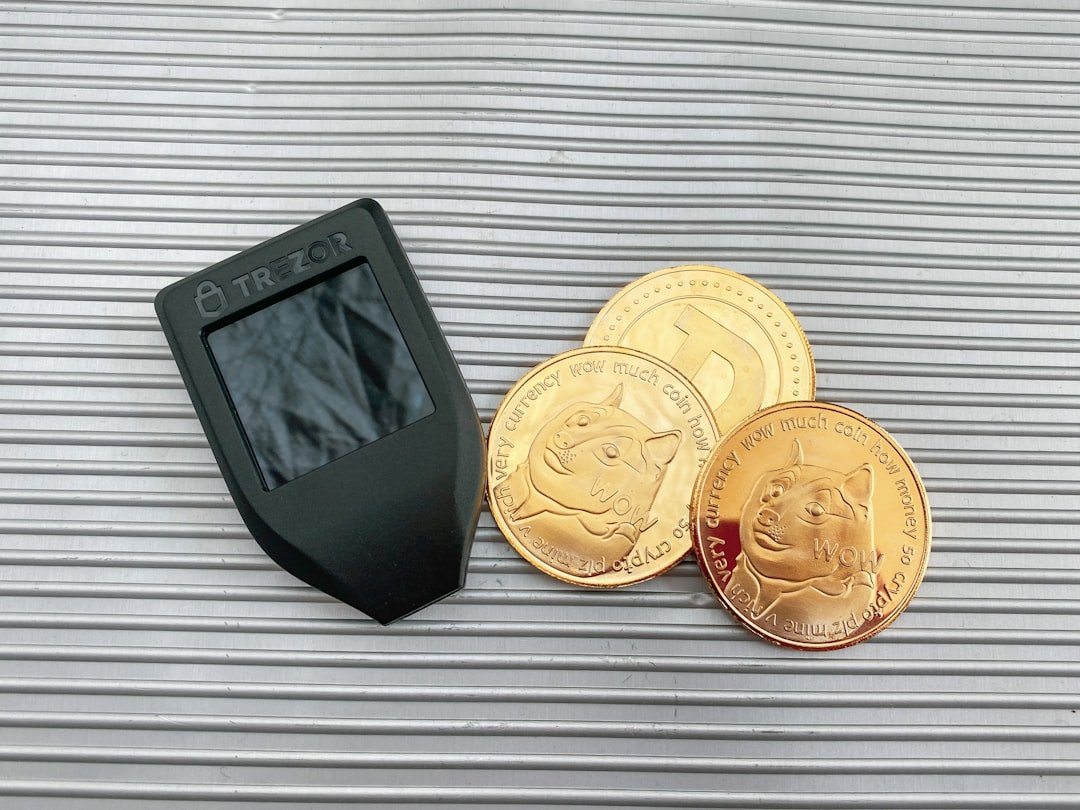
Photo by rc.xyz NFT gallery on Unsplash
Step 6: Plan for Tax Efficiency
Long-term holders benefit significantly from understanding tax implications:
- In most jurisdictions, holding for more than one year qualifies for lower long-term capital gains rates
- Selling and rebuying (to "realize" gains) can create unnecessary tax liability
- Consider tax-loss harvesting during bear markets if beneficial in your jurisdiction
- Keep detailed records of all purchases for cost basis calculations
The halving strategy naturally aligns with tax-efficient investing since it encourages holding through full cycles rather than frequent trading.
Common Mistakes to Avoid
Even investors who understand the halving thesis often make critical errors that undermine their long-term returns. Here are the most common mistakes and how to avoid them.
Mistake #1: Trying to Time the Exact Bottom or Top
The allure of buying at the absolute bottom and selling at the absolute top is powerful but practically impossible to achieve. Countless investors have sat on the sidelines waiting for a "better entry" only to watch prices climb without them. Others have sold too early, missing the most explosive phase of bull markets.
The fix: Accept that you won't time it perfectly. A strategy of consistent accumulation during favorable phases and holding through full cycles has historically outperformed attempts at precision timing.
Mistake #2: Over-Leveraging Based on Halving Expectations
The halving thesis is compelling, but it doesn't eliminate volatility or guarantee specific price targets. Some investors make the dangerous mistake of using leverage to amplify their exposure, assuming the halving "guarantees" profits.
The fix: Never use leverage for long-term holds. Volatility can and will trigger liquidations even in bull markets. Bitcoin regularly experiences 20-30% corrections even during strong uptrends. Leverage turns temporary drawdowns into permanent losses.
Mistake #3: Ignoring Macro and External Factors
While the halving is a significant supply-side catalyst, it doesn't operate in a vacuum. Interest rates, regulatory developments, technological changes, and global economic conditions all influence Bitcoin's price trajectory.
The fix: View the halving as one factor among several, not a guaranteed outcome. Build a thesis that accounts for multiple scenarios, including ones where the halving doesn't produce the expected results.
- Halving creates predictable supply reduction that has historically preceded bull markets
- Long-term holding strategy aligns with tax efficiency
- Removes emotional decision-making from investment process
- Allows participation in Bitcoin's asymmetric risk/reward profile
- Past performance doesn't guarantee future results
- Cycles may lengthen or returns diminish as market matures
- Requires patience through significant drawdowns (70-85% historically)
- External factors can override supply dynamics
Mistake #4: Panic Selling During Bear Markets
This is perhaps the most costly mistake for halving-aware investors. Understanding the cycle intellectually doesn't make it emotionally easy to hold through a 70% drawdown. Yet selling during bear markets has historically been the worst possible strategy.
The fix: Only invest what you can truly afford to hold through extreme volatility. If a 70% paper loss would cause you financial or emotional distress, reduce your position size until it wouldn't.
Mistake #5: Assuming This Cycle Will Be Identical to Previous Ones
The market evolves. The 2024 cycle is already proving different from previous ones due to ETF dynamics and institutional involvement. Assuming exact repetition of previous patterns can lead to poor decisions.
The fix: Use historical patterns as a guide, not a script. Be prepared for variations in timing, magnitude, and character of market movements. The principles (supply reduction matters) remain valid even if the specific expressions vary.
Mistake #6: Neglecting Security
Long-term holders face long-term security risks. Exchange hacks, phishing attacks, and inheritance planning all become critical concerns over a multi-year holding period.
The fix: Invest in proper security. Use hardware wallets. Implement strong authentication. Document your holdings and access procedures for estate planning purposes. The investment you protect is only as good as your ability to access it when needed.
Best Practices for Halving-Aware Investing
Beyond avoiding mistakes, implementing these best practices can optimize your halving-based investment strategy.
Maintain a Long-Term Perspective
The halving thesis is fundamentally a long-term thesis. It requires thinking in four-year cycles, not four-week trading periods. This perspective should inform every decision you make:
- Evaluate news and price movements in context of the broader cycle
- Resist the urge to check prices constantly
- Focus on accumulation rate rather than current portfolio value during accumulation phases
- Measure success over complete cycles, not daily fluctuations
Document Your Investment Thesis
Write down why you're investing in Bitcoin and what role the halving plays in your thesis. This document becomes invaluable during volatile periods when emotions can cloud judgment. Revisit it when tempted to deviate from your strategy.
Your thesis might include: - Your understanding of Bitcoin's value proposition - Your target allocation and timeline - Your plan for different cycle phases - Your criteria for potentially selling (if any) - Your risk management parameters
Diversify Within a Bitcoin-Focused Strategy
While this guide focuses on Bitcoin and the halving, consider how Bitcoin fits within your broader portfolio:
- Maintain adequate emergency savings in fiat currency
- Consider traditional assets for stability and diversification
- If holding altcoins, understand they have different risk profiles
- Don't concentrate so heavily that a worst-case scenario would be catastrophic
-
Remove decision fatigue by automating your DCA strategy. Most exchanges offer recurring purchase features.
-
If holding significant amounts, transfer to self-custody. Practice recovery procedures before transferring large amounts.
-
Document halving dates, accumulation phases, and your purchase history. This helps maintain perspective during volatile periods.
-
Mark halving dates and estimated phase transitions. Use these as prompts to review and potentially adjust your strategy.
-
Connect with other long-term investors who share your time horizon. Having support during bear markets helps maintain conviction.
-
Check if your Bitcoin allocation has grown beyond your target percentage and consider rebalancing if necessary.
Stay Informed Without Becoming Obsessed
The cryptocurrency space generates enormous amounts of content, much of it noise. Develop a curated information diet that keeps you informed without consuming your attention:
- Follow 2-3 high-quality analysts or publications
- Ignore short-term price predictions
- Focus on fundamental developments (network growth, adoption metrics, regulatory clarity)
- Take periodic breaks from crypto content, especially during high-volatility periods
Plan for Success
Many investors spend significant time planning their accumulation strategy but little time thinking about what happens if they succeed. Consider:
- At what point might you take some profits?
- How will you handle the tax implications of a 10x gain?
- Will you rebalance or let your Bitcoin position grow indefinitely?
- What life goals might realized gains fund?
Having answers to these questions in advance prevents emotional decision-making during euphoric market conditions.
The halving is not an event to trade around—it's a fundamental property that makes Bitcoin worth holding for the long term. Those who understand this have consistently been rewarded for their patience.
Frequently Asked Questions
Conclusion
The Bitcoin halving represents one of the most predictable and powerful catalysts in the cryptocurrency market. By reducing the rate of new supply entering circulation every four years, the halving creates a structural tailwind for long-term price appreciation that has historically translated into significant gains for patient investors.
But understanding the halving is only the beginning. The real work lies in implementing a disciplined strategy that allows you to benefit from this knowledge—accumulating consistently, managing risk appropriately, securing your holdings, and most importantly, maintaining conviction through the inevitable volatility that characterizes Bitcoin markets.
The investors who have generated the greatest returns from Bitcoin haven't been the traders trying to time every swing. They've been the HODLers who understood the long-term thesis, positioned themselves accordingly, and held through multiple cycles. The halving gives these investors a framework for understanding market cycles and a reason to believe that patience will be rewarded.
As you develop your own halving investment strategy, remember these key principles:
- Position early: Don't wait for confirmation of a bull market to invest
- Accumulate consistently: Dollar-cost averaging removes emotion and ensures participation
- Secure properly: Long-term holdings require long-term security solutions
- Think in cycles: Measure success over complete four-year periods, not daily price movements
- Stay patient: The halving thesis is a long-term thesis that requires long-term commitment
The next halving will occur around 2028, and then 2032, and so on until the final Bitcoin is mined over a century from now. Each halving further reduces supply, increases scarcity, and potentially rewards those who understood and acted on this knowledge. The question isn't whether the halving matters—history suggests it does. The question is whether you'll position yourself to benefit from it.
Continue Building Your Crypto Investment Knowledge
The halving is just one piece of a complete long-term investment strategy. Explore our comprehensive guides on portfolio construction, risk management, and market analysis to strengthen your approach to building wealth in crypto.
Read Our Complete Bitcoin Guide
Comments
No comments yet. Be the first to comment!
Leave a Comment