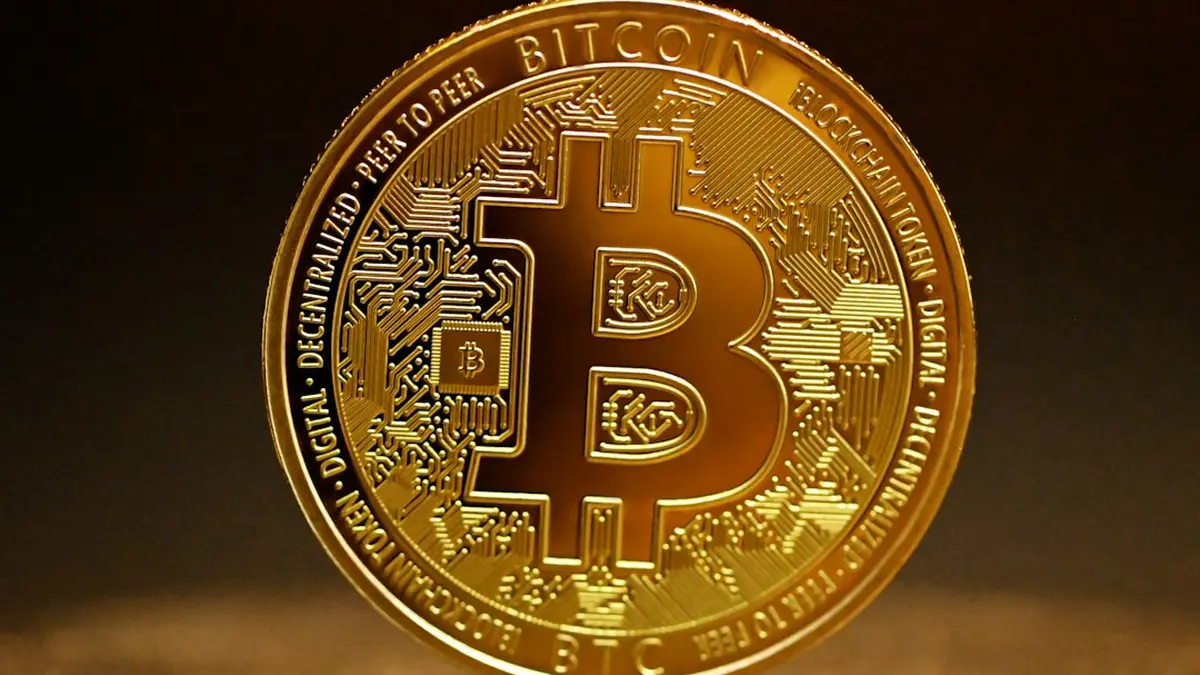
For most long-term holders, a low-fee spot Bitcoin ETF inside the Roth IRA you already have is the simpler and usually cheaper route. A crypto IRA makes sense mainly if you specifically want the account to own coins rather than fund shares. The choice comes down to three things: how the fees are charged, whether you are buying once or buying every year, and what "owning the coins" gets you when you still cannot hold the keys.
The tax treatment is the same either way. A Roth IRA grows tax-free and pays out tax-free in qualified withdrawals, whether it holds ETF shares or bitcoin itself. The 2026 contribution cap is also the same for both, $7,500, or $8,600 at 50 and over, because the IRS limits dollars going in, not what they buy.
Nothing here was tested by us. Every figure names its source and the date that source carries.
The two routes side by side
| Feature | Spot Bitcoin ETF in a Roth IRA | Crypto IRA |
|---|---|---|
| What the account owns | Shares of a fund that holds bitcoin | Beneficial ownership of the coins themselves |
| Who holds the coins | Coinbase for IBIT, ARKB, BITB and BTC; Fidelity Digital Assets for FBTC | Coinbase Custody (iTrustCapital), BitGo Trust (Bitcoin IRA), Bitstamp (IRA Financial), segregated SOC 2 custody (Swan) |
| Can you hold the private keys | No | No; IRA rules require a qualified custodian |
| Annual cost, BTCETFCalc (Aug 2026) and IRA Financial comparison | Expense ratio: BTC 0.15%, BITB 0.20%, ARKB 0.21%, IBIT 0.25%, FBTC 0.25% | Account fee: iTrustCapital $0, Bitcoin IRA $0, IRA Financial $100, Swan $240 minimum, Accuplan $349 |
| Fee per purchase or sale | No commission (Bullionite) | iTrustCapital 1%, IRA Financial 1%, Swan 1%, Accuplan 1%, Bitcoin IRA 2% |
| Setup fee | None (Bullionite) | $0 at iTrustCapital, Bitcoin IRA, IRA Financial and Swan |
| Year-one cost on $50,000, Bullionite estimate | About $125 | About $875 |
| 2026 contribution limit, IRS | $7,500; $8,600 at 50+ | $7,500; $8,600 at 50+ |
| Assets available | Bitcoin only, per fund | Swan: bitcoin only; IRA Financial 45+, iTrustCapital 75+, Bitcoin IRA 80+ tokens |
Two gaps are worth naming. The brief for this piece asked for the issuers' own fee pages, but the expense ratios above come from BTCETFCalc, which compiles them from SEC filings and issuer disclosures. Confirm the figure on the issuer's page before you buy. We also found no published fees for Unchained IRA or the Fidelity Crypto IRA, and no provider in our sources publishes its trade spreads, the gap between the price you pay and the market price. Those costs may sit on top of the fees listed.
A spot Bitcoin ETF in a Roth IRA
A spot Bitcoin ETF is a fund that owns actual bitcoin, not futures, and sells shares of itself on the stock market. You buy those shares in a Roth IRA the way you would buy an index fund.
The cost is the expense ratio, a yearly percentage of what you hold. It is never billed to you. As BTCETFCalc explains for IBIT, the fund sells small amounts of its bitcoin to pay its costs, so each share slowly represents a little less bitcoin. On 1,000 IBIT shares, about 0.5662 BTC, that drag comes to roughly 0.0140 BTC over ten years, about $1,400 at a $100,000 bitcoin price.
The spread between funds is real. On BTCETFCalc's August 2026 figures, Grayscale's Bitcoin Mini Trust (BTC) charged 0.15% while IBIT and FBTC charged 0.25%, a gap the site puts at about $350 per $10,000 over ten years. Morgan Stanley's MSBT, launched April 2026, charged 0.14%. Grayscale's original GBTC charged 1.50%, and is the one to avoid for a long hold.
What you give up is the coin itself. The account owns a claim on bitcoin held by the fund's custodian, which is Coinbase for most of these funds. You are trusting the fund and its custodian rather than holding anything you could move.
There is also a quieter advantage. Fidelity notes that the classic triggers for unrelated business taxable income, a tax that can reach inside an IRA, are partnerships and borrowed-money investments. A plain ETF share is neither.
Buy this if you want bitcoin exposure in a Roth you already run, at the lowest ongoing cost, with nothing new to administer.
- Expense ratios of 0.15% to 0.25% at the main funds (BTCETFCalc, Aug 2026)
- No setup fee and no commission to buy (Bullionite)
- Sits in an ordinary Roth IRA with your other holdings
- You own fund shares, not bitcoin
- The fee is taken in bitcoin, so each share holds slightly less every year
- The percentage fee grows as your balance grows
A crypto IRA with a qualified custodian
A crypto IRA is a self-directed IRA, a retirement account allowed to hold assets a normal brokerage will not, set up so that it owns coins directly. The coins sit with an institutional custodian such as Coinbase Custody or BitGo Trust.
Here is the part most marketing skips. As IRA Financial's Adam Bergman puts it, "you cannot personally hold the private keys to your cryptocurrency" inside an IRA. Taking control of the keys yourself is a prohibited transaction and can disqualify the whole account, making it taxable at once. So the coins are yours on paper, but a custodian still controls them, just as with an ETF. Custodial status is not a guarantee either: Bullionite cites a 2022 breach at IRA Financial in which $36 million of crypto held in retirement accounts was stolen through compromised administrative credentials.
The costs are built differently. According to IRA Financial's provider comparison, iTrustCapital charged no annual fee and 1% per trade, Bitcoin IRA no annual fee and 2%, IRA Financial $100 a year and 1%, and Swan a $240 minimum a year and 1%. Accuplan's own crypto IRA charged $349 a year plus 1% per transaction. Every new contribution pays that trading fee again.
The providers do offer things an ETF cannot: many tokens, precious metals and, at some, staking. None of that matters to a bitcoin-only long-term holder, and the tax treatment of staking inside an IRA is not settled in these sources.
Open one if owning the coins rather than a fund's shares matters to you and you understand you still will not hold the keys.
- The account owns coins, not fund shares
- Flat or zero annual fees at several providers, which do not grow with your balance
- Swan offers bitcoin-only custody with no rehypothecation
- 1% to 2% on every purchase and sale
- You still cannot hold the private keys
- Trade spreads are not published in our sources
Where ten years of fees land on $50,000
The headline claim in this debate is Bullionite's: about $125 in year one for the ETF against about $875 for a crypto IRA. That estimate assumes custody fees of 0.75% to 1% a year. The four branded providers in IRA Financial's comparison do not charge that way, so the real picture depends on which provider you mean.
Take $50,000 bought once and held ten years, with the balance held flat so the arithmetic stays honest:
- BTC (Grayscale Mini) at 0.15%: $75 a year, about $750.
- IBIT or FBTC at 0.25%: $125 a year, about $1,250.
- iTrustCapital: 1% to buy, $500, then nothing yearly. $500, or $1,000 if you pay 1% to sell at the end.
- Bitcoin IRA: 2% to buy, $1,000.
- IRA Financial: $500 to buy plus $100 a year, $1,500.
- Swan: $500 to buy plus at least $240 a year, at least $2,900.
- Accuplan: $500 plus $349 a year, $3,990.
So the difference is not one-sided. A one-time lump sum into a zero-annual-fee crypto IRA can come out close to a 0.25% ETF over a decade. The cheapest ETF still wins, and that is before any spread the crypto IRA charges.
Two things tilt it further. First, the ETF fee is a percentage, so it rises if bitcoin rises and falls if it falls. A flat fee does not move. Second, most readers do not buy once. Someone adding $7,500 each year pays the crypto IRA's 1% or 2% on every deposit, $75 to $150 a time, while the ETF charges nothing to buy. That is where the ETF's lead becomes hard to close. Those annual limits are covered in this year's contribution caps.
Which one to open
If you already have a Roth IRA and add money each year, buy a low-fee spot Bitcoin ETF in it. On August 2026 figures, that means BTC at 0.15% or MSBT at 0.14% if cost is the only test, and IBIT or FBTC at 0.25% if you prefer the largest funds. Skip GBTC.
If you are moving a large sum in once and want the account to own actual bitcoin, a crypto IRA with no annual fee and a 1% trading fee, such as iTrustCapital on IRA Financial's published figures, costs about the same as a 0.25% ETF over ten years. Ask for its spread in writing before you move money, because our sources do not publish it.
If what you want is to hold the keys yourself, neither route gives you that, since IRA rules forbid it. That goal belongs outside retirement accounts. For how this choice fits into a longer retirement plan, see the wider Bitcoin Roth IRA strategy.
Comments
No comments yet. Be the first to comment!
Leave a Comment